
The complete guide
Buying Guide
What is a hand held toilet bidet?
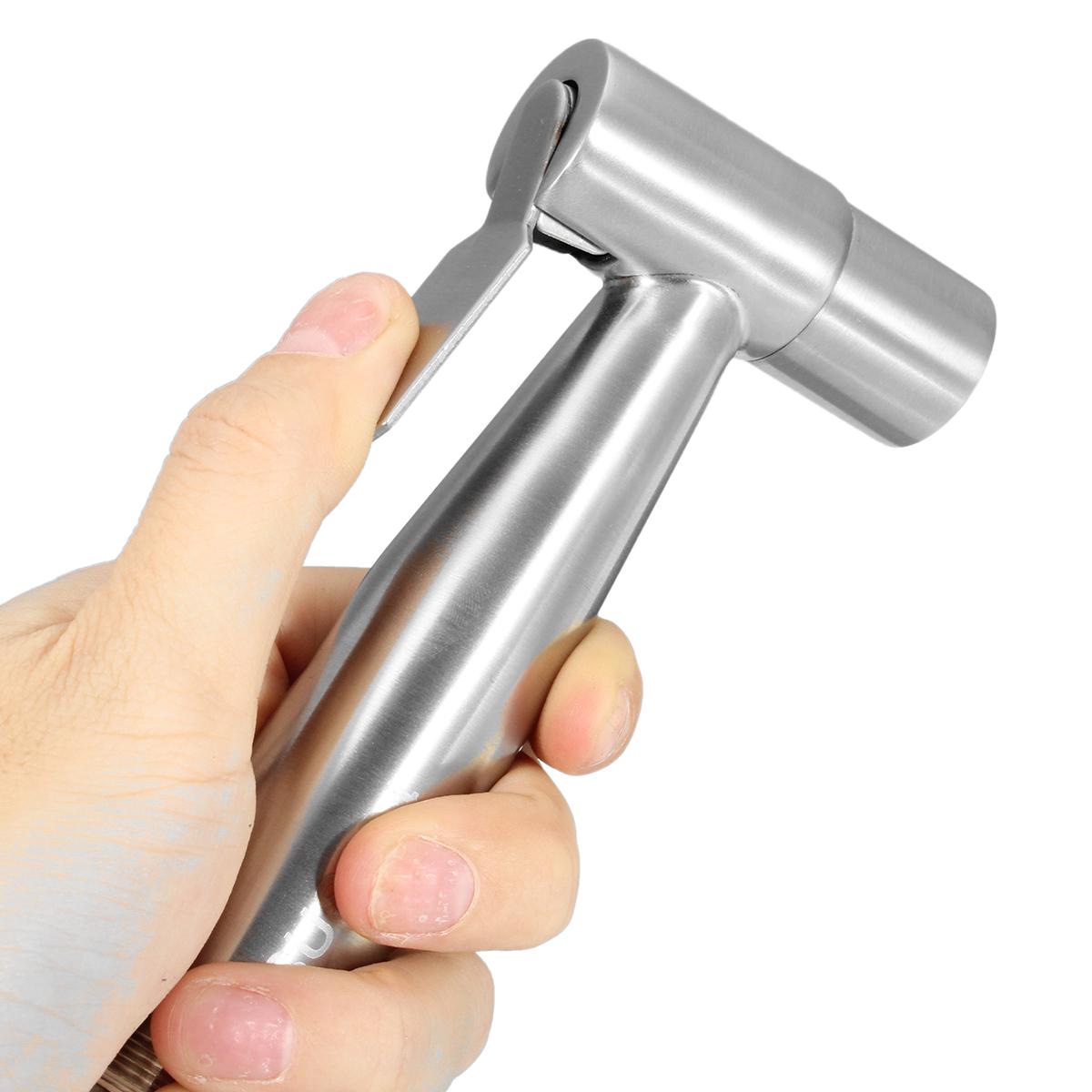
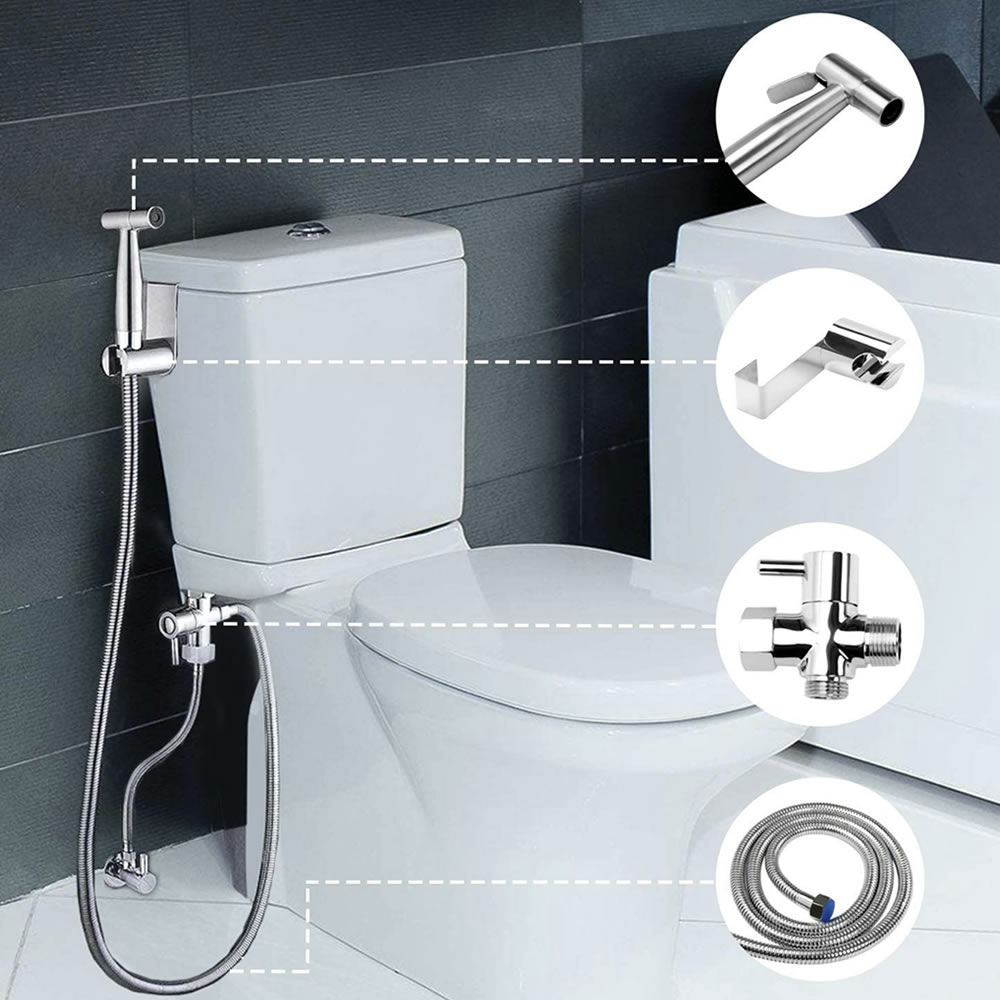
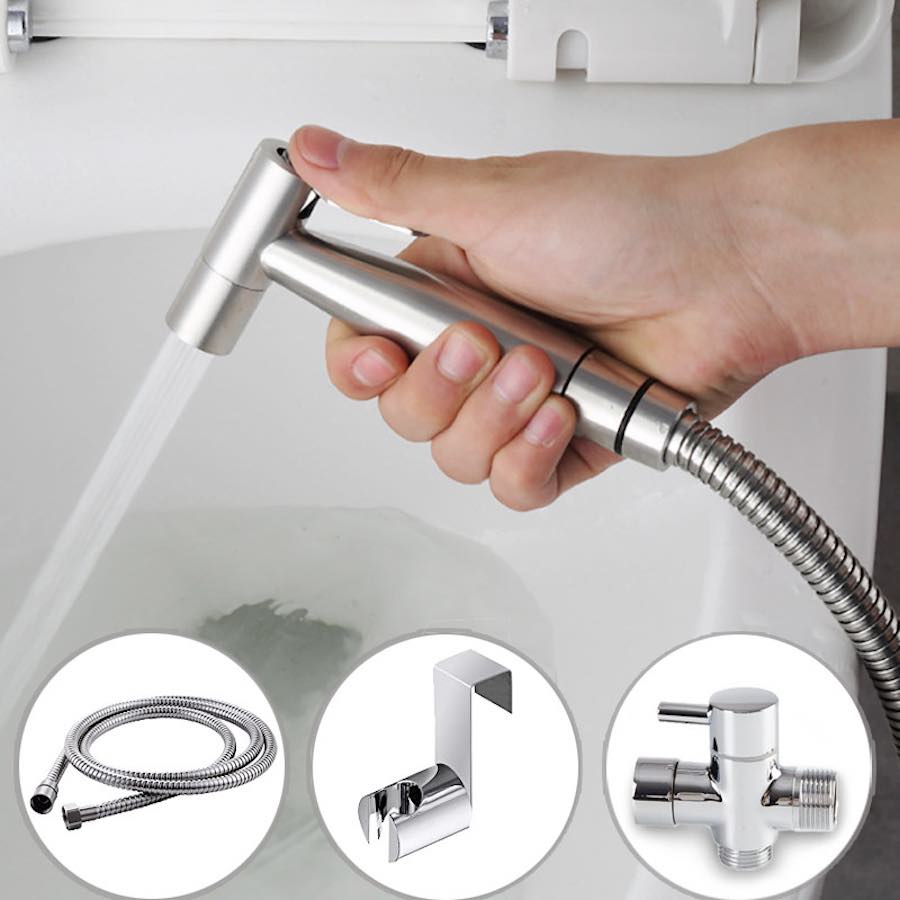
A hand held toilet bidet is a compact spray device that mounts beside your toilet and connects to the existing water supply. It consists of a spray head with a trigger, a flexible hose, a T-valve adapter and a holder bracket. What distinguishes it from a fixed-nozzle attachment or a powered seat is that you hold the spray head in your hand and direct the water yourself, which is what makes it useful for jobs a fixed nozzle cannot reach.
How a bidet spray attachment connects to your toilet
The T-valve connection
Every toilet has a water supply line running from a shut-off valve on the wall or floor to the inlet at the base of the cistern. A bidet spray attachment taps into that line with a T-valve adapter, a small fitting shaped like the letter T that creates an extra outlet without disrupting the original flow. One branch carries on feeding the cistern for normal flushing. The other feeds the bidet hose. The T-valve carries its own shut-off lever, so you can depressurise the sprayer when it is not in use.
The flexible hose
A flexible hose connects the T-valve to the spray head, so the sprayer reaches wherever you need it while seated. It has to be long enough to reach comfortably, typically between 100 cm and 150 cm, and strong enough to take your household water pressure without swelling, kinking or leaking over time. The better ones use a braided outer over a reinforced inner tube, which combines flexibility with pressure resistance.
The holder bracket
When the sprayer is not in use it rests in a holder bracket, either mounted on the wall beside the toilet or clipped to the side of the cistern. The holder keeps the sprayer to hand, stops the hose dangling and keeps the head clean between uses. A wall-mounted holder is the most stable and the most adjustable but needs a couple of small screws. A tank clip attaches without drilling, which suits renters and anyone who wants the whole thing to be reversible.
What to look for when choosing a hand held bidet spray
The gap between a well-made hand held toilet bidet and a cheap one shows up quickly in daily use. These are the markers that matter.
Spray head construction
The spray head is the part you handle most, so it needs to feel solid, work smoothly when wet, and resist corrosion in a room that is permanently damp. Solid 304 stainless steel is the best material for the job: it resists corrosion, it has a weight that feels substantial without being heavy, and its finish survives years of use. Thick ABS with proper chrome plating is a lighter alternative that also performs well. What to avoid is anything that feels thin-walled or hollow, because those crack, discolour and develop leaking triggers early.
Trigger feel and variable pressure
The trigger is the control, so its design decides how the sprayer feels to use. A good one gives smooth, consistent resistance that responds in proportion to how hard you squeeze. A light touch gives a gentle stream; a firmer squeeze gives a stronger one for rinsing a cloth nappy or the bowl itself. That variable pressure is the hand held bidet's main advantage over a fixed nozzle, because it means you never have to reach for an external valve to change the flow.
Hose material and durability
The hose is the component most likely to fail, and a hose failure means water where you do not want it. A braided outer layer stops kinking, absorbs pressure surges and protects the inner tube from abrasion. The inner tube should be EPDM rubber or reinforced PVC, both of which take sustained pressure and temperature swings. Plain rubber and thin plastic kink, swell under pressure and crack as they age.
T-valve material and shut-off quality
The T-valve is small and it decides whether the whole system stays reliable. Solid brass is the best material: it resists corrosion, it does not flex under pressure, and its threading seals cleanly with plumber's tape. Stainless steel is the other good answer. Zinc alloy looks like brass when new and corrodes, cracks and fails, particularly where the water is aggressive. The shut-off should move smoothly and close completely, because that is what lets you depressurise the system between uses.
Spray pattern and nozzle design
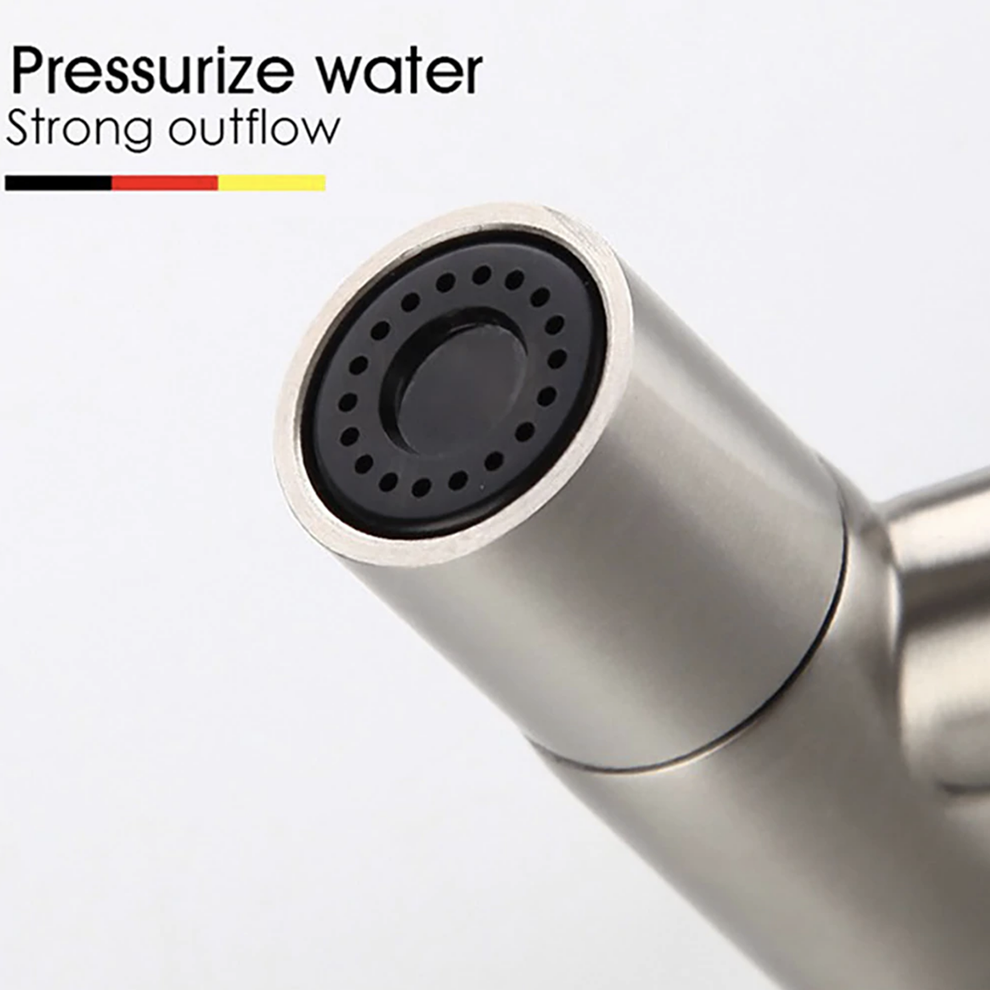
Spray patterns vary. Some heads produce a single concentrated stream that puts maximum force on a small area. Others spread the water into a softer, wider cone that covers more ground more gently. Some let you switch between the two by rotating the head. A focused stream is more effective for rinsing; a wider one feels gentler and needs less precision.
Finish and aesthetic options
If your bathroom fittings matter to you, hand held bidet sprays come in a range of finishes. Polished chrome is the most common and matches most fittings. Brushed nickel is warmer and more muted. Matte black suits a contemporary bathroom. Gold, rose gold and gunmetal all exist. Matching the sprayer to your taps, flush button and towel rails is what makes it read as a deliberate choice rather than an afterthought.
Beyond personal hygiene: other uses for your bidet spray attachment
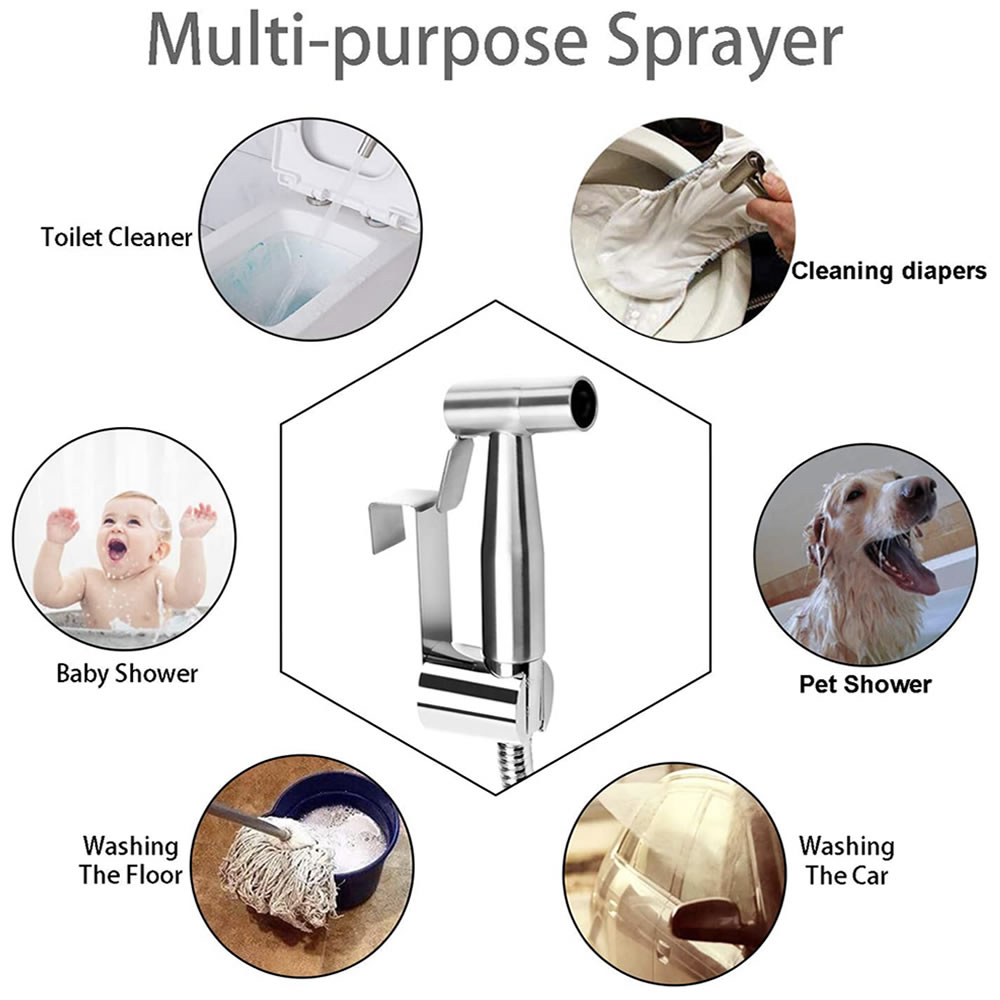
The handheld design makes the sprayer useful for jobs beyond its main one, which is part of why it earns its place.
Cloth nappy rinsing
Parents using cloth nappies consistently rank a hand held bidet spray as one of their most useful tools. Instead of dunking and scrubbing by hand, you hold the nappy over the bowl and let the stream do it in seconds. It is faster, it is cleaner, and it keeps your hands out of it. Plenty of people buy the sprayer for this and find the rest of it a bonus.
Toilet bowl maintenance
A quick spray round the inside of the bowl after use rinses residue away between proper scrubs. The focused stream shifts stuck-on material that a flush alone leaves behind, and the habit takes a few seconds.
Pet washing and general bathroom cleanup
A small pet that needs a rinse, muddy feet before bath time, or a bathroom surface that needs a targeted spray all benefit from a sprayer within reach. The trigger gives you enough control to manage the flow precisely, which matters with a nervous animal or when you want to rinse one spot without soaking the room.
Installation: about ten minutes
Fitting a hand held toilet bidet is one of the simplest jobs in the bathroom. It needs no special skills, no professional help and only basic tools.
What you need
An adjustable wrench or pliers, a small towel or bucket, and plumber's tape. The kit provides the T-valve, the hose, the spray head, the holder, the washers and the rest of the hardware.
The installation process
Shut off the water supply to the toilet at the valve on the wall behind the bowl. Flush once to empty the cistern and release the residual pressure. Put a towel under the supply connection to catch what is left. Disconnect the supply hose from the base of the cistern. Wrap every threaded connection on the T-valve with plumber's tape, then fit the T-valve between the supply hose and the cistern inlet. Connect the bidet hose to the open port on the T-valve. Mount the holder bracket on the wall or the cistern where you want it. Turn the water back on slowly and check every connection for leaks. Test the sprayer over the bowl and confirm the spray is strong and steady. Then close the T-valve shut-off to depressurise the system until you next use it.
Tips for a clean installation
Apply two or three wraps of plumber's tape clockwise round every threaded connection before you assemble it. Hand-tighten everything first, then add a quarter to half a turn with the wrench and stop. Overtightening is the most common cause of a cracked fitting or a crushed washer, so resist the urge to crank it down. After the water is back on, leave the system pressurised for a few minutes and check every joint again. A properly fitted sprayer should be leak-free from the first day.
Maintenance that takes almost no effort
Close the shut-off after every use
This takes one second and it is the single most useful habit for the life of the sprayer. Closing the T-valve when the sprayer is idle takes the standing pressure off the hose, the trigger seal and every connection. That one habit can double how long the whole system lasts, because it stops the slow seal degradation that turns into drips and leaks.
Weekly wipe-down
Once a week, wipe the spray head, the hose and the holder with a soft damp cloth. On stainless steel, a touch of white vinegar on the cloth takes off water spots and keeps the finish bright. Avoid abrasive pads, bleach and aggressive chemical cleaners: they strip finishes and degrade rubber gaskets.
Periodic descaling
Where the water is mineral-heavy, calcium and limescale build up inside the spray head and cut the flow. Every six months or so, unscrew the head from the hose and soak it in equal parts white vinegar and warm water for 30 to 60 minutes. Clear anything left in the spray holes with a soft brush or a toothpick, rinse it and put it back. That keeps the pattern full and even.
Common questions about hand held bidet sprays
Will it splash water everywhere?
Used while seated, the spray points down into the bowl, and the seat and your own body make an enclosure that keeps the water in it. There is a short learning period while you find the angle and the distance, and most people have it after two or three goes. The variable trigger is what makes that easy: start with a gentle squeeze and increase it gradually.
Is cold water tolerable?
The water in household pipes sits at ambient temperature, which is milder than most people expect, and the contact time is brief. A quick burst into the bowl first clears whatever has been standing in the exposed section of pipe and brings the flow closer to room temperature. Most people stop noticing within the first week. If you would rather have warm water, mixing-valve kits that blend the hot and cold supply are readily available.
Is it hygienic to have a sprayer near the toilet?
The spray head sits in its holder above and away from the bowl. It never touches the bowl interior, and the water running through it comes straight off the clean supply line. It is no more exposed to bathroom bacteria than the flush button or the seat. Wiping it regularly and placing the holder sensibly keeps it clean.
Why the hand held toilet bidet earns its place
Of all the bidet options available, the hand held sprayer stands out for how simple it is. It needs no electricity, it fits any toilet, it goes on in about ten minutes, and it puts the water directly under your control with nothing to program and nothing to troubleshoot. It cleans more thoroughly than paper alone, it cuts how much paper the house gets through, and it doubles as a cloth-nappy rinser, a pet sprayer and a bowl cleaner.
It is not a luxury and it is not a novelty. It is an ordinary piece of bathroom hardware that most people, once they have used one, do not go back from.