
The complete guide
Buying Guide
What is a toilet bidet attachment?
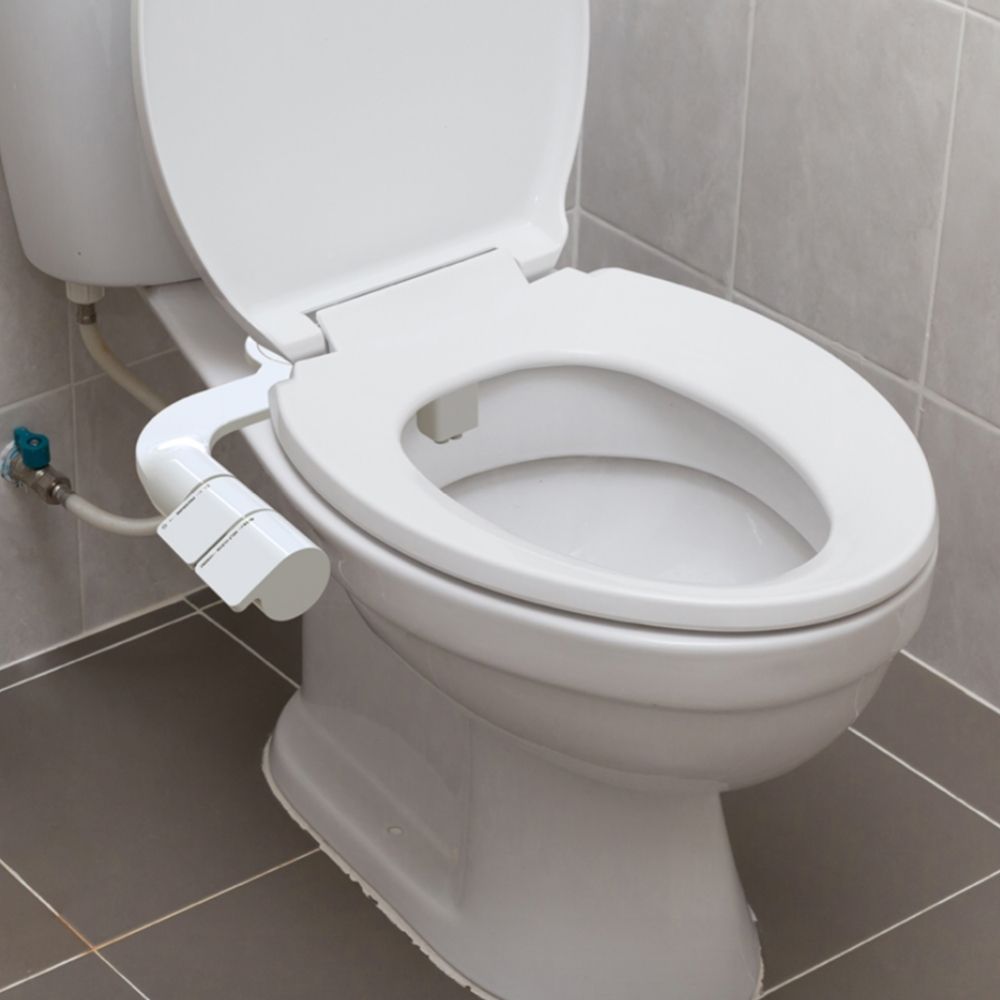
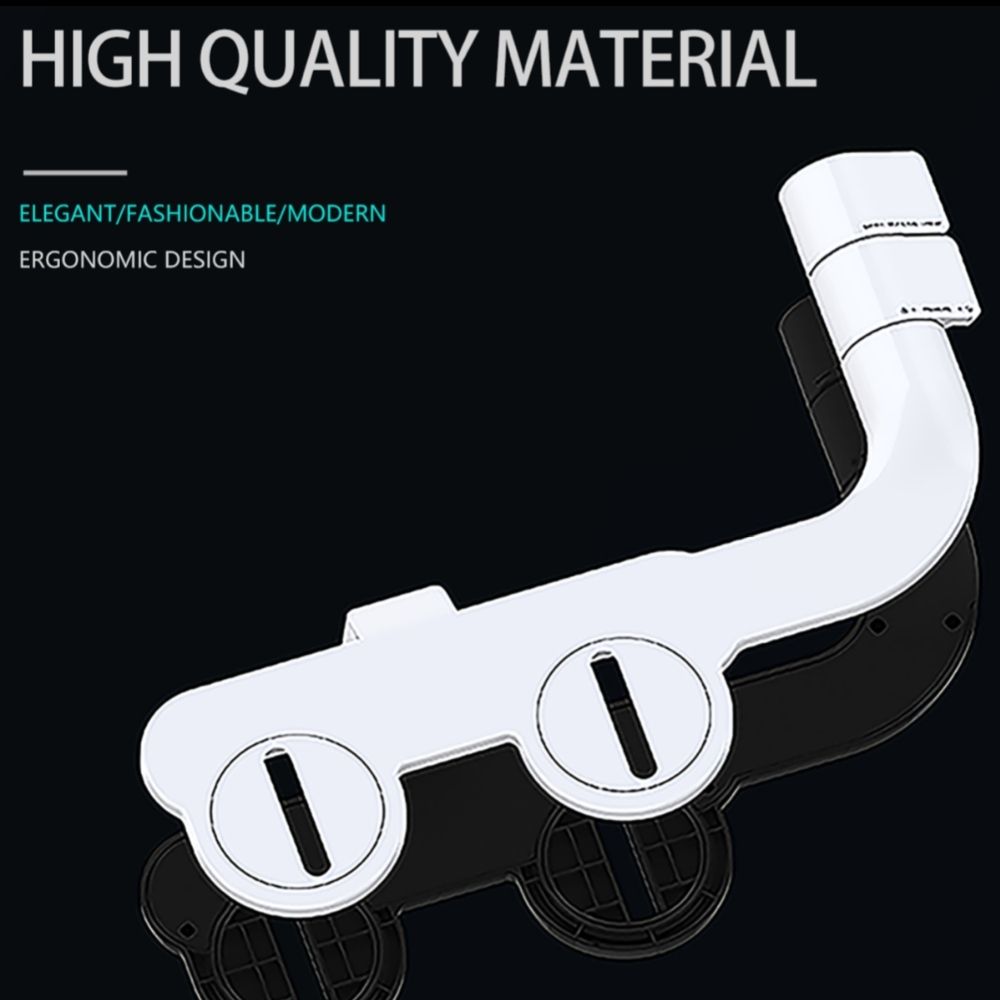
A toilet bidet attachment is a thin plate that sits between the pan and the seat you already own, carrying one or two nozzles and a control dial. It takes its water from the toilet's own cold supply through a T-adapter, so it needs no power point. Fitted, it is barely visible: the seat closes on the rim the way it did before.
The 4.8 mm plate, and why the thickness matters
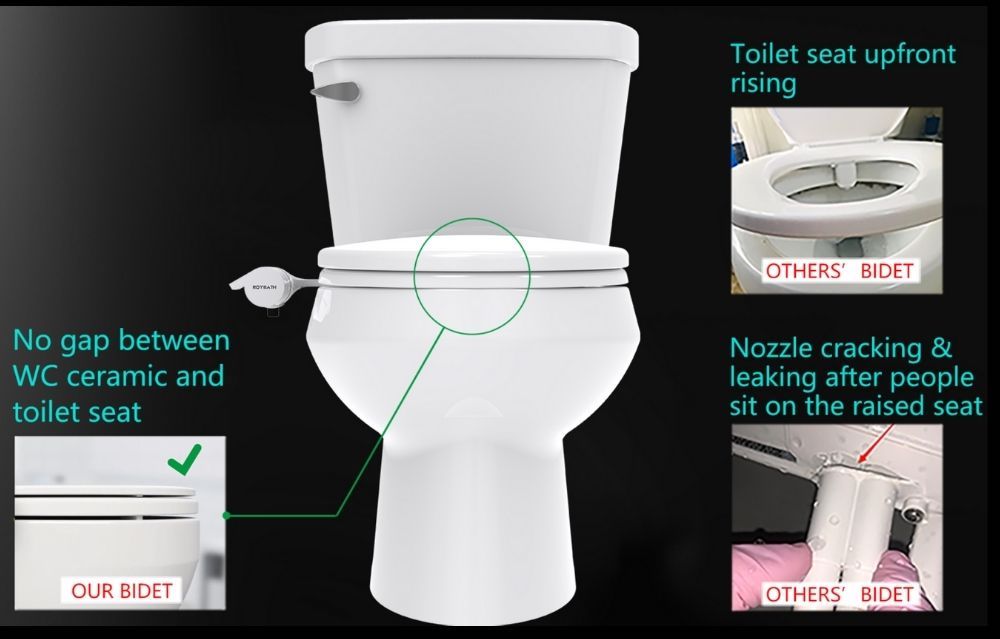
Earlier attachments sat about 12 mm proud of the pan, which lifted the seat noticeably and made the whole thing feel like something bolted on. This one is 4.8 mm, roughly 60 per cent thinner. The practical difference is that the seat still sits where it is supposed to, and the attachment reads as part of the toilet rather than an addition to it.
Two nozzles, one dial
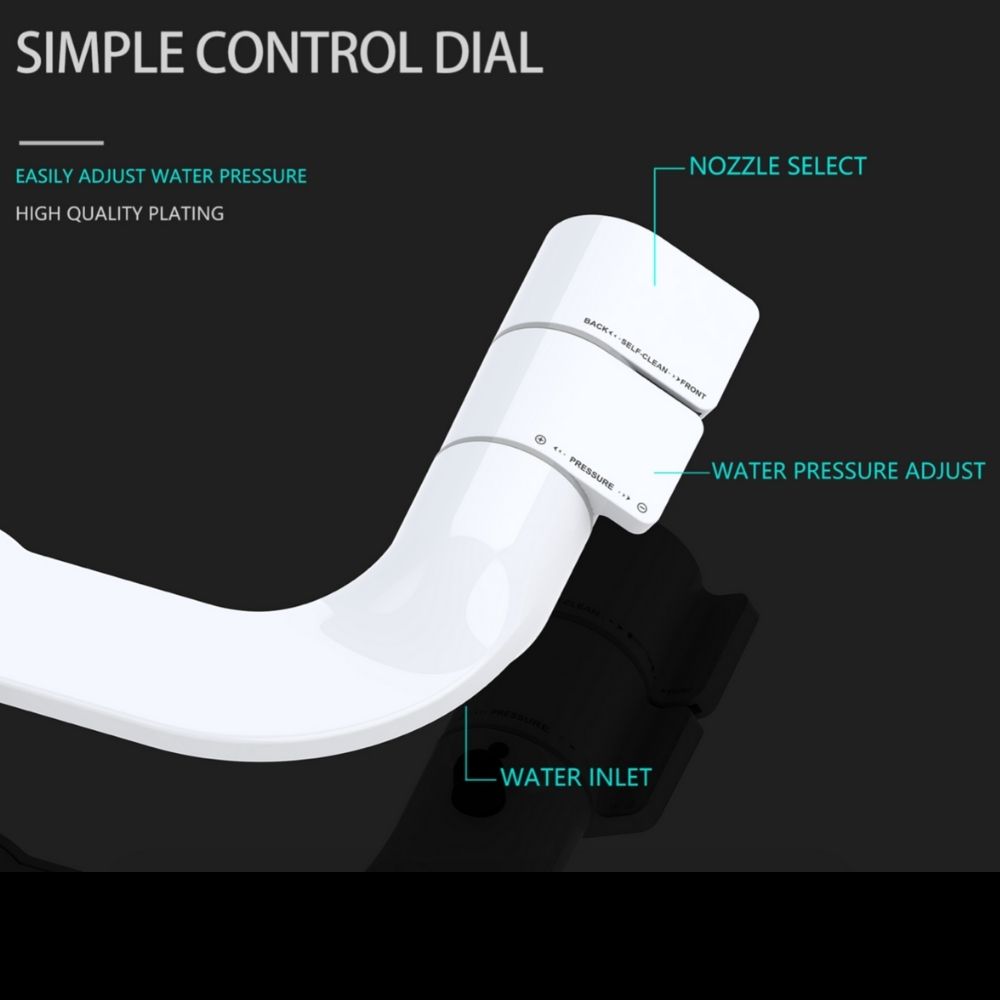
The control dial does two jobs. Turned to the right it opens the posterior nozzle; turned further, it raises the pressure, and the further round it goes the stronger the flow. Turned to the left it switches to the feminine nozzle and to self-cleaning, which runs water over the nozzle itself rather than at the user.
That single-dial arrangement is worth understanding before you fit it, because it is not the same as a two-lever attachment. One movement selects what the water does and how hard it does it.
Nozzle protection
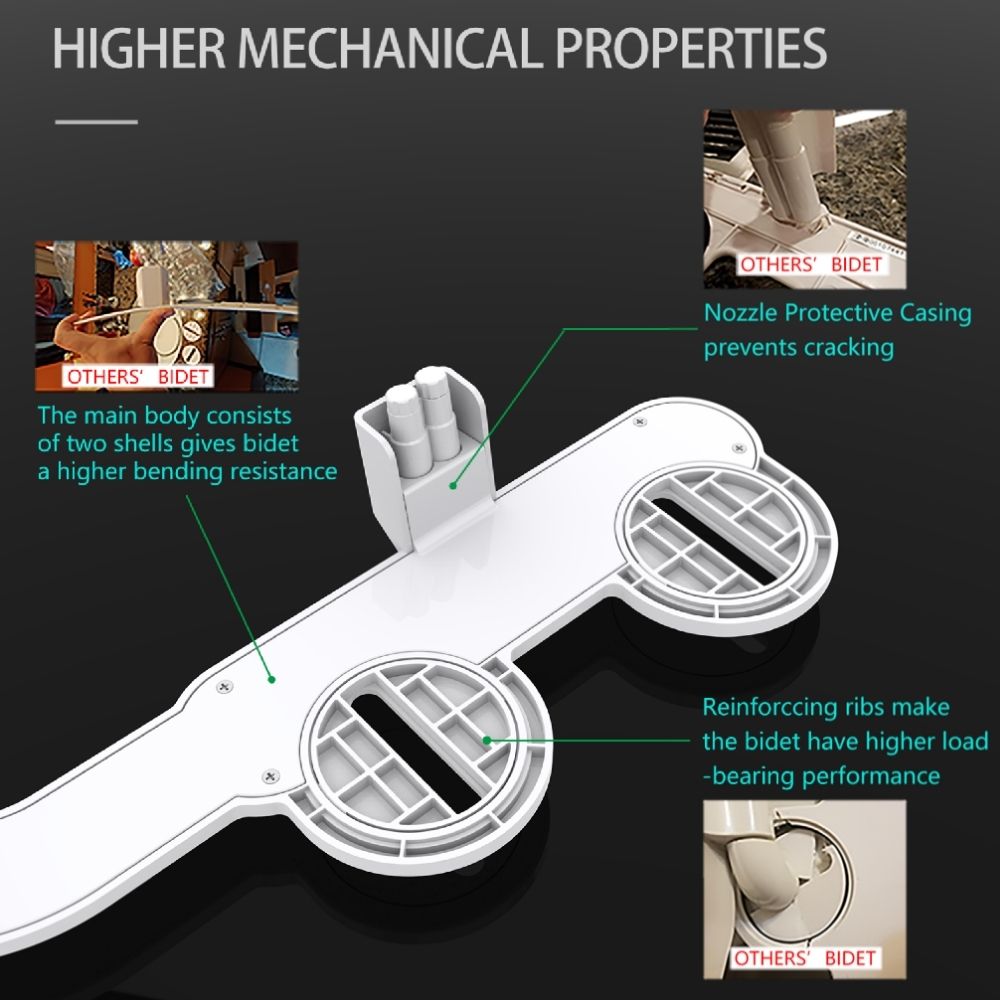
The upper part of the nozzle housing is concave, which leaves a gap between the nozzle and the toilet's pedestal ring. That gap is the reason the nozzle does not get crushed when weight goes on the seat, and a crushed nozzle is the most common way a cheaper attachment dies.
Materials and fittings
The body is ABS. The fittings supplied with it are a brass T-shaped adapter and a braided steel cold water hose, which are the two components that decide whether the installation stays dry. Brass threads seal cleanly with plumber's tape and do not flex under pressure; a braided hose resists kinking and takes pressure surges without swelling.
Fitting it
Shut off the water at the valve behind the toilet and flush once to empty the cistern. Take the seat off. Lay the attachment plate on the rim, line the bolt holes up with the seat holes and refit the seat through both. Disconnect the supply hose at the cistern inlet, fit the brass T-adapter between them, and run the braided hose from the T-adapter to the attachment. Turn the water back on slowly and check every joint. Then run the dial through both directions over the bowl before anybody sits down.
Two or three wraps of plumber's tape clockwise on each thread, hand tight, then a quarter turn with a spanner. Do not crank it.
Looking after it
Run the self-cleaning position for a few seconds after each use and the nozzle keeps itself clear. Wipe the plate down when you clean the toilet, using an ordinary bathroom cleaner rather than anything abrasive, and keep bleach off the ABS. Where the water is hard, take the nozzle out every six months and soak it in equal parts white vinegar and warm water to clear the limescale.
Common questions
Will it fit my toilet?
It fits standard toilet sizes, which is nearly all of them, because it mounts on the rim under the seat rather than replacing anything. What it needs is a cold water supply line with a shut-off valve, which every toilet has.
Does it need electricity?
No. It runs entirely on the mains water pressure that already feeds the cistern, which is why there is no power lead and nothing to plug in.
Is the water cold?
It is whatever temperature your cold supply is, which is milder than most people expect and is only in contact for a few seconds. If you would rather have warm water, a mixing valve that blends the hot and cold supply can be fitted at the same time.
What is in the box?
The attachment plate, the brass T-shaped adapter, the braided steel cold water hose, the fixing hardware and the instructions. The only tools you need are a spanner or pliers, plumber's tape and a towel.